

Best Female Chef
Valentina Álvarez | Montuvia / Iche
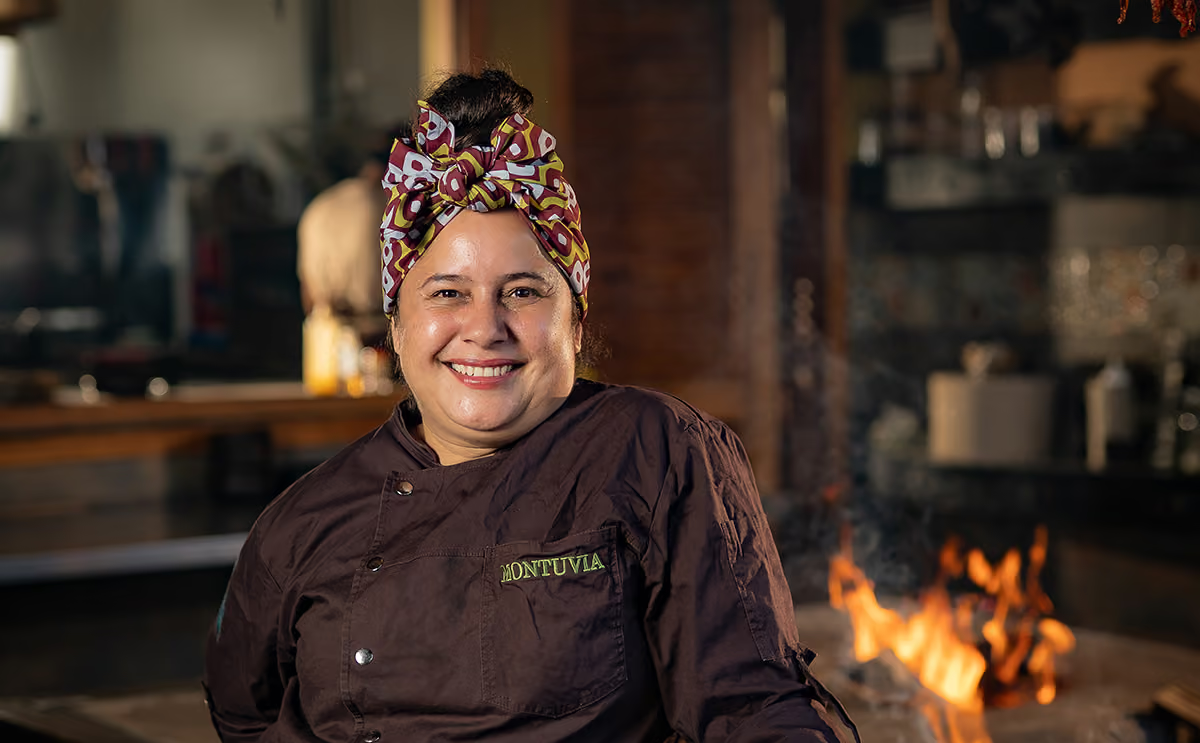
Valentina Álvarez’s story has one element that sets it apart from that of many chefs of her generation: she did not learn to cook in culinary school or prestigious kitchens, but around a family hearth. And unlike those who seek to reinterpret tradition, her work is about showing that tradition itself contains knowledge we have, in many cases, barely begun to understand.
The ancient Manabí oven is perhaps the best example: an ancestral cooking system capable of more than twenty culinary and preservation techniques, from smoking to slow cooking. After more than fifteen years of research, Álvarez has shown that it is not simply a relic of the past, but a sophisticated tool containing centuries of experimentation and culinary knowledge. In 2023, she dismantled one of these ovens, packed it into six suitcases and took it to Asturias, Spain, where she presented it on an international stage.
Her curiosity is infectious and has captivated audiences from Monaco to London and Madrid. Her years studying Manabí’s culinary traditions, together with ambitious projects to document the cuisine of her province—collecting hundreds of recipes that have survived only through oral memory—help explain the importance of her work.
At Iche, Álvarez leads the culinary school and serves as executive chef of the restaurant. She has found in this culinary laboratory a place to turn what she has learned into social change. She works with young people from rural communities for whom gastronomy can offer a path toward economic independence. Beyond teaching them to cook, she seeks to show them that the knowledge inherited from their families has real value. Meanwhile, her work at Montuvia in Cumbayá has brought the deep-rooted flavors of Manabí to new diners in the capital.
At a time when so many chefs pursue innovation through ever more sophisticated techniques, Valentina Álvarez finds much of the future of Ecuadorian cuisine in a clay oven, in the recipes of her ancestors and in the knowledge of women whose expertise has rarely been celebrated. Her invaluable contribution lies in rescuing that legacy, proving that it can become a force for change and a source of great pride for all Ecuadorians.